Home › Thermostats & Zoning
Thermostats & Zoning in Columbia, TN — Fix the Hot and Cold Rooms
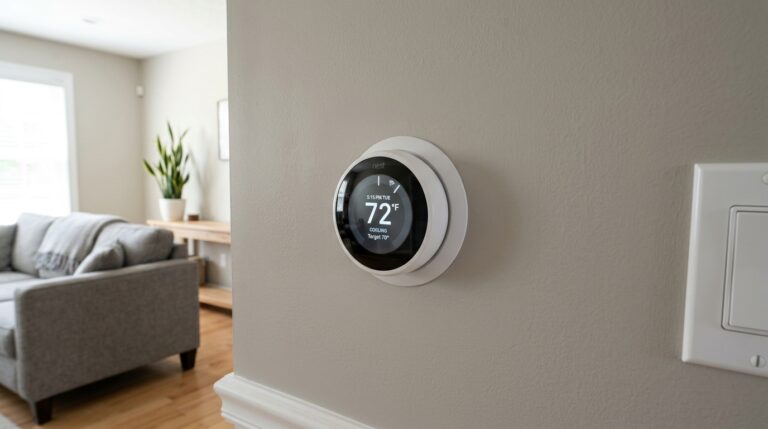
If your upstairs roasts while the downstairs freezes, the system is usually fine — the air is going to the wrong places. Zoning splits the house into areas with their own thermostats and dampers. And when the problem is just the control itself — a blank screen or a wrong mode — that is where smart thermostat installation in Columbia, TN comes in: we fit the right control and set it up so it works with your heat pump, not against it.
5-star ratedLicensed & insured in Tennessee25 years in businessColumbia, TN · Price in writing before work starts
Why one floor is hot and the other is cold
- Heat rises, and most two-story duct systems were run for the first floor first
- Upstairs runs are longer, smaller, or leaking into the attic
- Many Columbia homes have no return air upstairs, so cooled air cannot circulate back
- One thermostat, usually downstairs, calls the whole house done while upstairs is still warm
Smart thermostat or zoning — which do you actually need?
| Your problem | Likely answer |
|---|---|
| Blank screen, system will not respond, schedule does not hold | Thermostat repair or replacement — check power and wiring first |
| Heat pump AUX heat runs too much, or settings confuse everyone | A heat-pump-rated smart thermostat, set up right — wrong setup is a common cause of high winter bills |
| Upstairs hot, downstairs cold, both floors used daily | Zoning: dampers plus a thermostat per floor, after the ducts are checked for leaks |
| One room wrong, rest of the house fine | Usually duct repair or a mini-split for that room — zoning a whole system for one room is overspending |
The fix order: cheapest honest answer first
Hot and cold rooms get sold backwards all the time — zoning quoted before anyone looks at the ducts. This is the order we work in, and the order any quote you get should follow.
Rule out the control
Wrong mode, wrong setup for a heat pump, a thermostat fooled by sun or a nearby vent. Costs little to check, embarrassing to skip.
Measure the air
Static pressure and vent-by-vent airflow. If the far rooms are starved, the numbers say so — no guessing.
Fix the ducts that fail the measure
Leaks sealed, crushed runs replaced, a return added where a room has none. A large share of hot-room calls end here.
Then zone what is left
If two floors honestly live at different temperatures after the ducts are right, dampers and a thermostat per zone finish the job — on ducts that can now support it.
One room only? Price a mini-split against zoning
Zoning a whole system for one stubborn room is often overspending. The mini-split page covers the one-room answer.
Where the thermostat hangs decides what it believes
| Spot | What goes wrong |
|---|---|
| Wall that takes afternoon sun | The thermostat cooks while the house is fine; the system over-cools all summer and the bill shows it |
| Above or beside a supply vent | It reads the system's own air, calls the job done early, and the far rooms never catch up |
| Hallway by the front door | Every door opening is a weather event to the thermostat; short, jumpy cycles follow |
| Kitchen wall | Oven heat reads as a hot house in summer and a warm house in winter — wrong in both seasons |
| Interior wall, chest height, near the main return | The honest spot: shaded, away from vents and doors, breathing the same air the system breathes |
Moving a thermostat is small work next to zoning, and on some houses it is the whole fix. We check placement on every comfort call before we price anything bigger — if a $0 observation and a short wire run solve it, that is the quote.
Zoning, in a picture — one system, two houses' worth of weather
Picture a two-story Spring Hill house in July: the downstairs sits at 72 by 3 p.m. while the upstairs bedrooms are still 78, because heat rises, the upstairs runs are the longest in the house, and the single downstairs thermostat already called the job done. Zoning puts a damper in each floor's trunk line and a thermostat on each floor. Now the upstairs can call for cooling after the downstairs is satisfied, and in winter the downstairs can call for heat without roasting the bedrooms. What zoning cannot do is create air: if the upstairs runs leak into the attic or there is no return upstairs, the dampers just split a shortage. That is why the fix order above measures first.
Control problems, sorted — including the two settings that decide a heat pump bill
| What you see | What it usually is |
|---|---|
| AUX heat runs on mild days | Setup, not hardware: many heat pump thermostats can lock the electric strips out above a set outdoor temperature, and hold the compressor as the only heat source down to a lower one. A control installed with those lockouts left at factory defaults — or never set — calls the strips early and often. Setting them for Columbia’s winter is part of a heat pump thermostat install, and the settings go on your paperwork |
| The bill jumps after a cold night | Recovery from a deep setback: the thermostat sees a house several degrees behind and calls AUX heat to catch up fast. Small setbacks, or a control set to recover gently, keep the saving the setback was meant to make |
| Smart thermostat reboots, drops Wi-Fi, or glows dim | Power. Smart controls need a common wire — the C-wire — for steady power. Without one, some controls steal sips of power through the equipment and glitch, or wear the system’s controls doing it. The honest fixes are running the wire, fitting an approved adapter, or choosing a control that does not need one — decided at the wall, before the new stat goes up |
| System starts and stops every few minutes | Placement (sun, a vent, a drafty hallway) or a temperature swing setting that is too tight for the house. Short cycles wear compressors and leave humidity behind |
| One room is the family’s whole complaint | A remote room sensor can help a smart thermostat average the rooms or favour the bedroom at night — worth pricing before zoning. It still cannot move air down a run that is not there |
| Thermostat shows a power warning — no power on the red wire | The thermostat is telling you it lost its power supply wire. The cause sits at the equipment end more often than at the wall: a blown low-voltage fuse, a tripped float switch, or a loose connection. Check the batteries if yours takes them; if the warning stays, that message word for word is worth telling us on the call |
| Both thermostats blank at the same time | Two stats dying together almost never means two dead thermostats — they share a power source, so one shared fault (fuse, float switch, or power to the air handler) blanks both. One blank stat is a stat problem; two blank stats is an equipment-power problem, and it sorts the visit before we arrive |
| Thermostat lights up and clicks, but the unit never starts | The control is calling and the equipment is not answering — the split matters. “Nothing clicks anywhere” points at power; “it clicks, then nothing” points at the equipment end: a safety switch holding it off, a capacitor, or a board that is not passing the call on. Tell us which of those two it does |
| Upstairs thermostat shows error codes | Write the code down exactly as shown, or photograph it, before resetting anything — a reset can clear the code the tech needs. A code on one zone's stat with the other zone running fine usually means the fault is local to that zone or its equipment call |
The C-wire question, answered before the thermostat is bought
Most smart thermostats need a C-wire — a common wire that gives the thermostat steady power from the system instead of sipping it from the heating and cooling circuits. Houses wired with four strands often do not have one. Without it, the classic symptoms are a thermostat that reboots when the system starts, a screen that dies in a cold snap, or a system that short-cycles because the thermostat keeps stealing power mid-call. The honest fixes, in order: use a spare strand in the cable if one exists, fit the maker's power adapter at the furnace board, or run a new cable where access allows. What we will not do is sell a thermostat first and discover the wire problem on install day — the wire count is part of the quote visit, and it is also why the same visit checks the AUX heat lockout setting on heat pumps, covered in the control problems section above and on the heat pumps page.
What a zoning install involves, once the ducts pass the measure
Dampers placed in the trunk lines
One motorised damper per zone, set where the floor’s or wing’s air splits off. Placement follows the airflow numbers from the fix order above, not the easiest place to reach.
A zone panel and a thermostat per zone
The panel runs the dampers and the equipment together, including AUX heat control on a heat pump. Each zone gets its own thermostat in an honest spot — the placement table above applies to every one of them.
Airflow proved with zones closed
The test that matters: one zone calling, the other closed. Static pressure gets read in that state, because a system that only works with every damper open is not zoned — it is just decorated.
Proof on control and zoning work, not promises
- Licensed & insured in Tennessee, based at 1230 Industrial Park Rd, Columbia
- Your settings on paper: AUX lockout and recovery settings for a heat pump, and each zone’s thermostat location, recorded at handover — the numbers a winter bill gets argued from
- Static pressure read before zoning is quoted and after it is fitted, both in writing, so “your ducts can take it” is a measurement
- The fix order, honoured: if the control or the ducts solve it, the zoning quote never gets written
One floor hot, one floor cold?
That is ducts and controls, rarely the outdoor unit. Call — we measure airflow and static pressure first, then price the thermostat, duct, or zoning fix that fits what we find.
Licensed & insured in Tennessee · ★★★★★ 5-star rated · 25 years in business · 1230 Industrial Park Rd, Columbia, TN
Thermostat & zoning FAQs
Will a smart thermostat work with my heat pump?
Only if it is a heat-pump model wired and set for AUX heat control. A cooling-only or wrongly set thermostat can run your backup strips far more than needed. Tell us your system type when you call and we will bring the right control.
My thermostat screen is blank and nothing runs. Is the system dead?
Often not. A blank screen can be a tripped float switch on a full AC drain pan, a blown low-voltage fuse, or dead batteries. Check batteries first; if the drain pan is full of water, that switch is doing its job — the drain needs clearing, and that is a service call worth making the same day.
Can zoning be added to my existing system?
Usually, if the duct layout lets dampers be placed and the equipment can handle the airflow. We measure static pressure first — zoning a system with already-tight ducts can do harm. If your ducts will not support it, we will say so and price the work that will.
The room never matches what the thermostat says. Is the thermostat wrong?
Often neither side is “wrong.” The thermostat reads only the air at the wall where it hangs, and sun on that wall, a draft, a nearby lamp, or a register blowing toward it can fool it. A cheap thermometer in another room can also read two or three degrees different just from height and placement. Where it gets real: if one room is always about five degrees off while the thermostat area feels right, air is not reaching or returning from that room — that is ducts and airflow, and no thermostat, smart or not, can send air down a run that is not there. A smart thermostat with room sensors can help the system favour the room you care about; it cannot fix the run.
Should I turn the temperature way down at night and back up in the morning?
On a heat pump, be careful with big swings. Ask the house to jump several degrees at once and the thermostat calls in AUX heat to help — and the strips can eat the saving the setback was supposed to make. Heat pumps here run best steady, or with small setbacks of a couple of degrees. On a gas furnace, a normal night setback is fine. Either way, setting the cooling to 65 does not cool the house faster — the system cools at one speed; a lower setting just runs it longer.
Related work on this site
Controls sit between three bigger jobs: the heating & furnace repair page when the call for heat itself fails, the duct repair page when measured airflow — not the thermostat — is the real fault, and the areas we serve page for every town we fit zoning in. Quick version first? The thermostat questions are gathered on the HVAC FAQs page.
Stop paying to heat and cool the wrong rooms.
Call and we will sort out whether the fix is the thermostat setup, the ducts, or a zone — measured first, priced in writing, no bigger unit sold as the answer to an airflow problem.
Licensed & insured in Tennessee · ★★★★★ 5-star rated · 25 years in business · 1230 Industrial Park Rd, Columbia, TN